About ICA GemLab

Science in service of trust.

We combine rigorous observation, advanced instrumentation and a living reference collection to deliver responsible gemmological opinions.

Our mission

Higher standards of accuracy, made practical.

ICA GemLab advances gemmological science while giving clients clear, usable information. Every conclusion is built from converging evidence: visual observation, microscopic features, spectroscopy, chemical composition and comparison with carefully documented reference material.

Our work is guided by three principles—responsibility, ethics and transparency—and by the belief that a report should communicate both confidence and scientific restraint.

Independent Evidence-led Gemstone-focused

Analytical methods

What each method contributes.

No instrument produces an origin or treatment conclusion on its own. Results are interpreted together with microscopy, specimen condition and reference data.

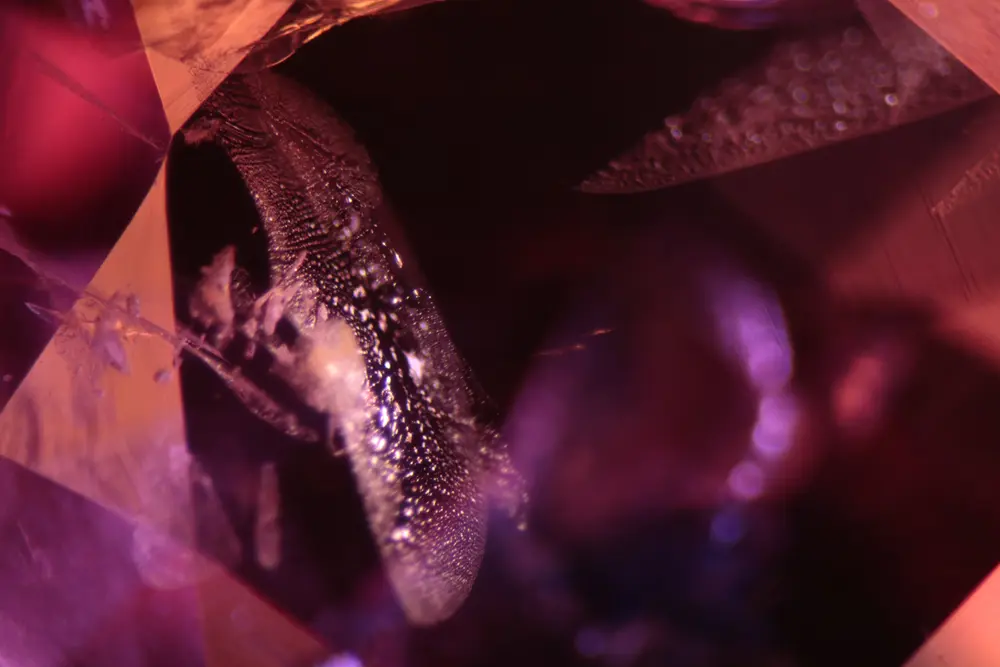
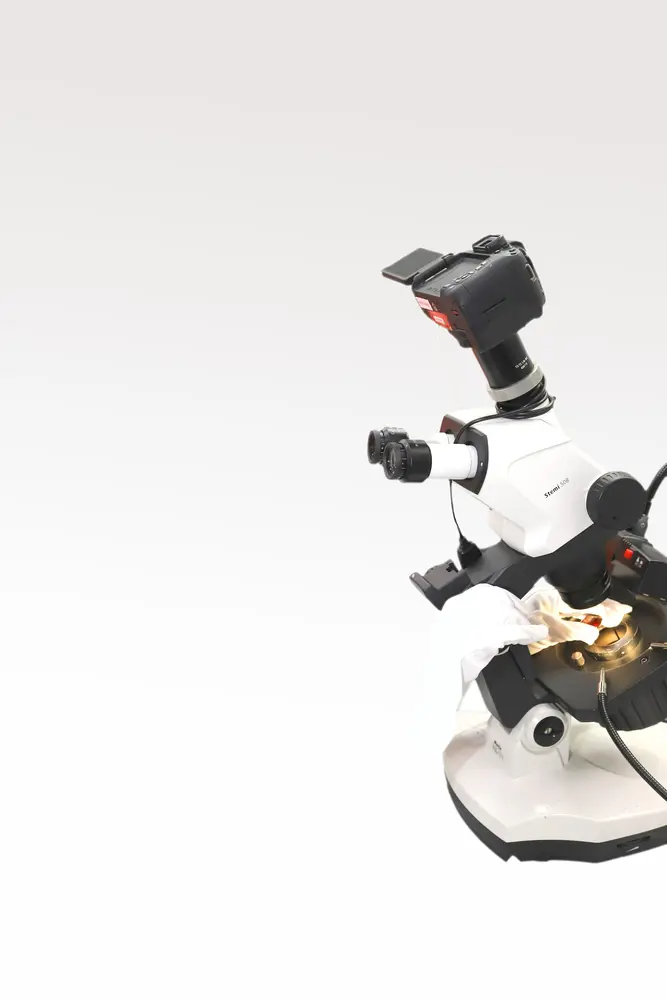
Microscopy analysis at ICA GemLab

Microscopy

Measures
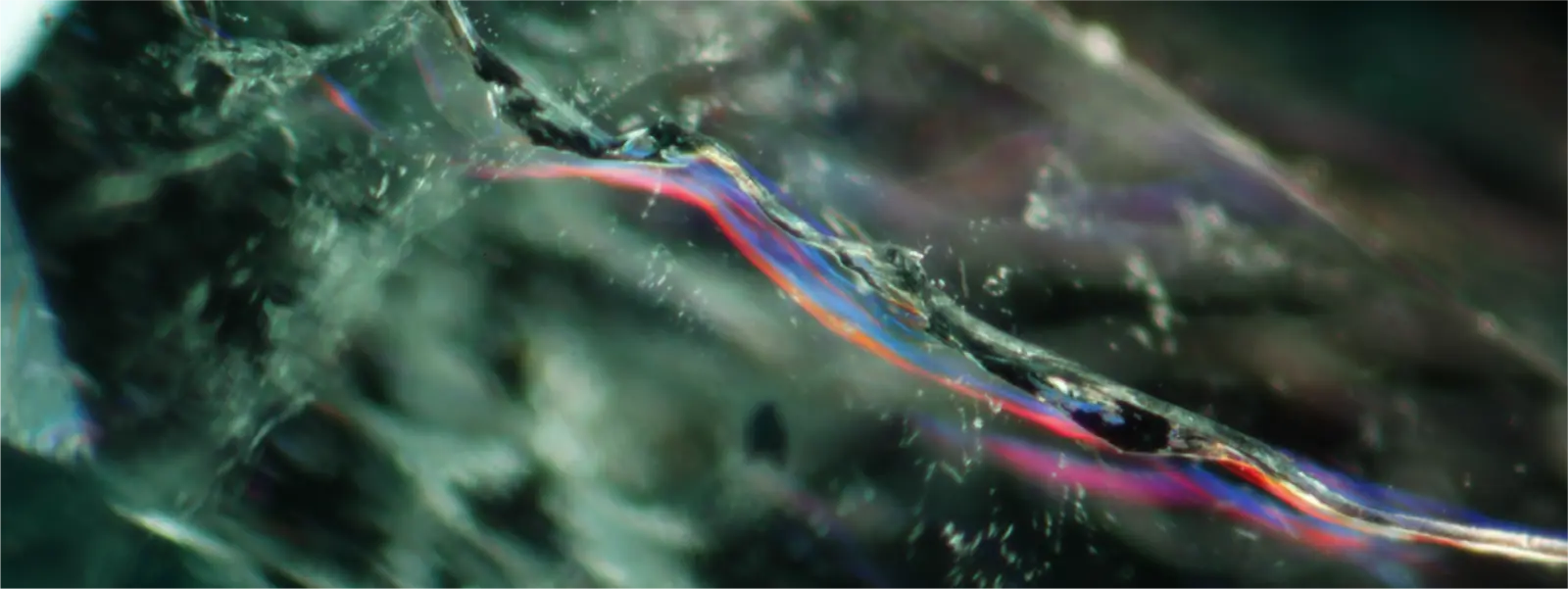
Darkfield, reflected-light and immersion observations reveal inclusions, growth structures and surface-reaching features.
Answers
Supports natural-versus-synthetic determination and the recognition of treatment evidence such as healed fissures, filling residues and flux-related features.
Submission
Non-destructive and often possible for mounted stones.
Limits
A setting can conceal the pavilion, girdle and areas required for a complete observation.
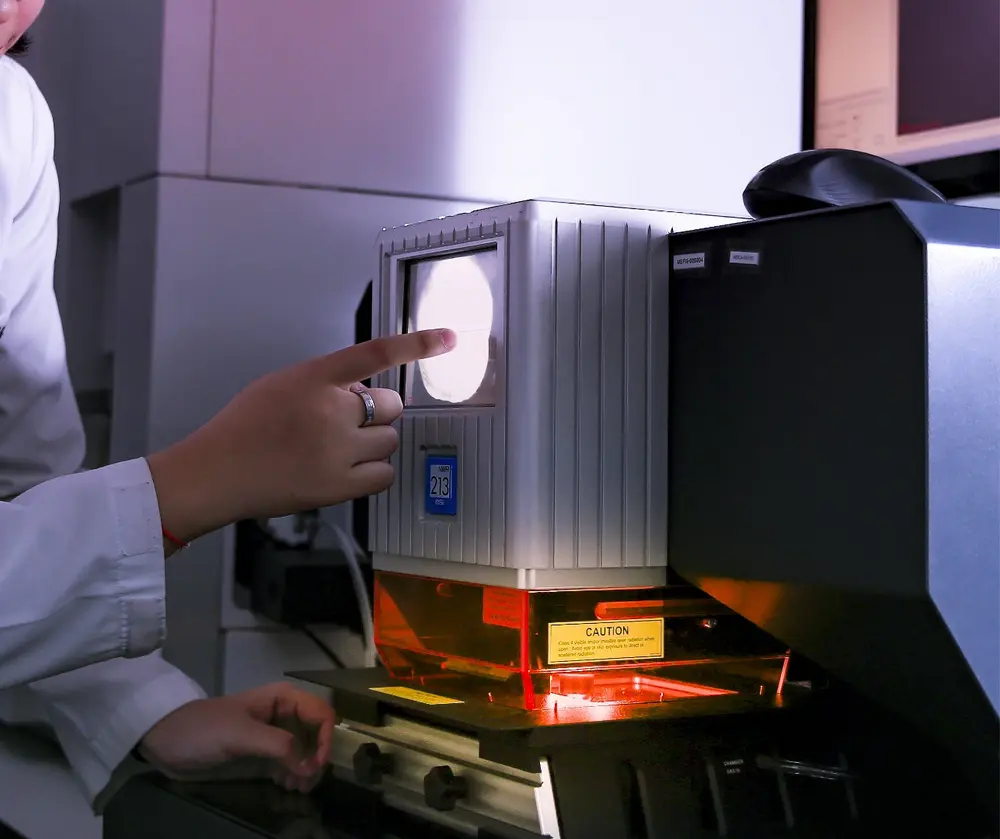
LA-ICP-MS analysis at ICA GemLab

LA-ICP-MS

Measures
Highly sensitive trace-element analysis measures elemental concentrations and diagnostic ratios at very low levels.
Answers
Supports testing for beryllium diffusion in corundum, copper-bearing tourmaline and trace-element comparison used in origin work.
Submission
The method is minimally invasive and uses a microscopic laser-ablation spot.
Limits
Suitability and the current ablation-spot specification must be confirmed before testing, particularly for mounted or historically important objects.
EDXRF analysis at ICA GemLab

EDXRF

Measures
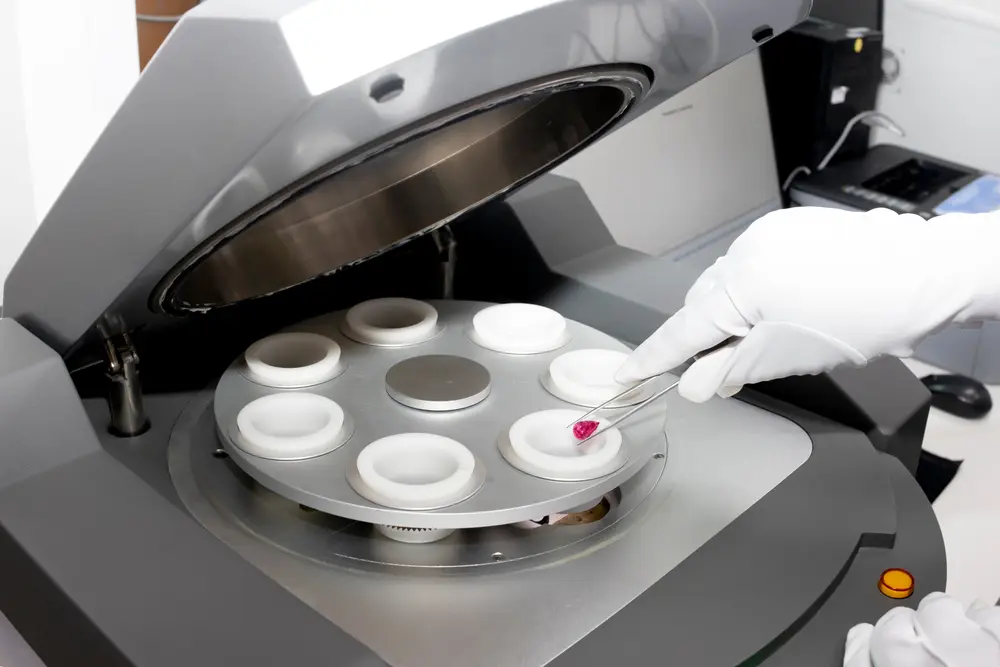
Non-destructive, semi-quantitative X-ray fluorescence analysis screens the elemental composition near the surface.
Answers
Helps characterise gemstone species and varieties and can support screening for lead-rich filling materials.
Submission
Many mounted stones can be examined without removal from the setting.
Limits
It does not measure light elements such as beryllium, lithium or boron and is less sensitive than LA-ICP-MS for trace-level questions.
Raman spectroscopy analysis at ICA GemLab

Raman spectroscopy

Measures
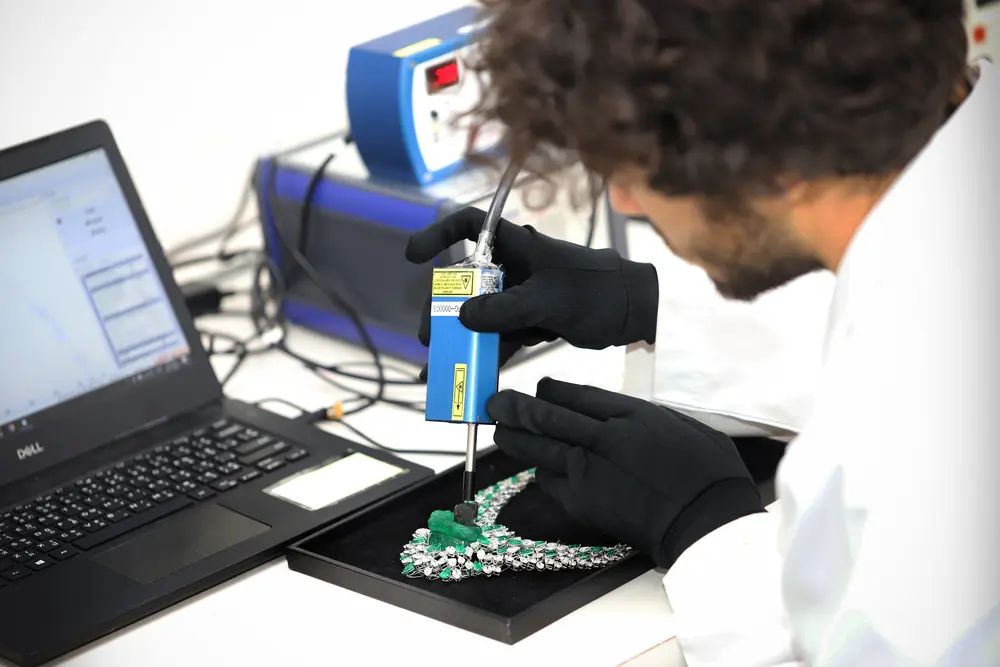
Laser excitation records molecular-vibration signatures from a precisely selected point.
Answers
Identifies mineral inclusions and some filling substances without opening the stone; complementary photoluminescence data can support further interpretation.
Submission
Non-destructive point analysis can target microscopic features within loose or accessible mounted stones.
Limits
Fluorescence, depth, orientation and an obstructing setting can reduce spectral quality.
UV–Vis–NIR analysis at ICA GemLab

UV–Vis–NIR

Measures
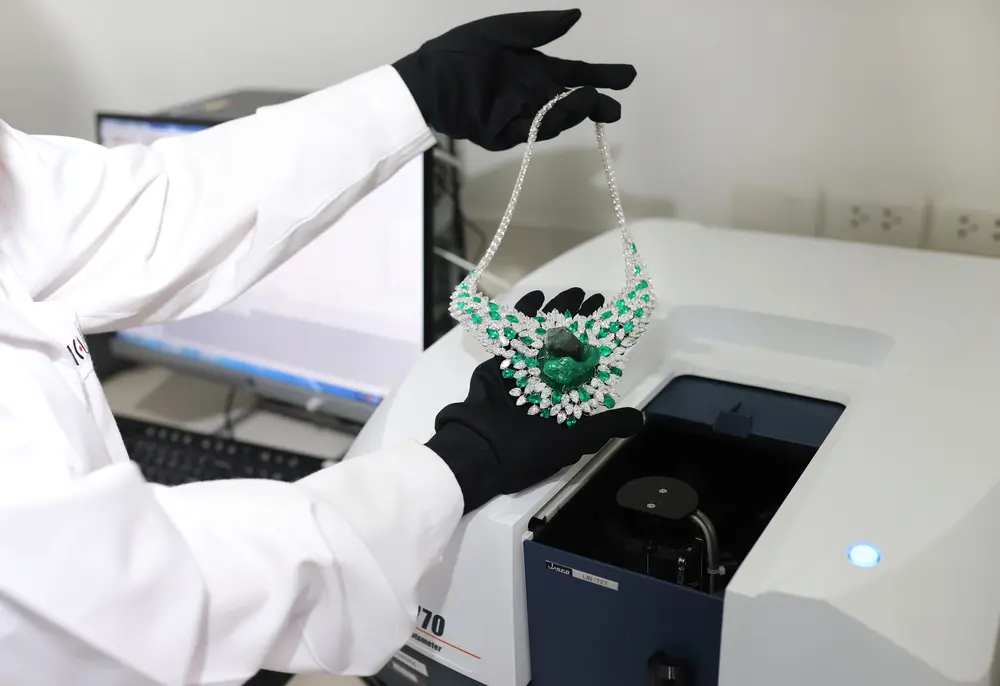
Ultraviolet, visible and near-infrared absorption spectra document transitions associated with colour-producing elements and defects.
Answers
Supports interpretation of colour causes involving chromium, iron, cobalt or vanadium and contributes to selected treatment and colour-stability investigations.
Submission
Generally non-destructive; loose stones provide the most controlled optical path.
Limits
Overlapping absorption features and restricted access in a setting require interpretation alongside other methods.
FTIR analysis at ICA GemLab

FTIR

Measures
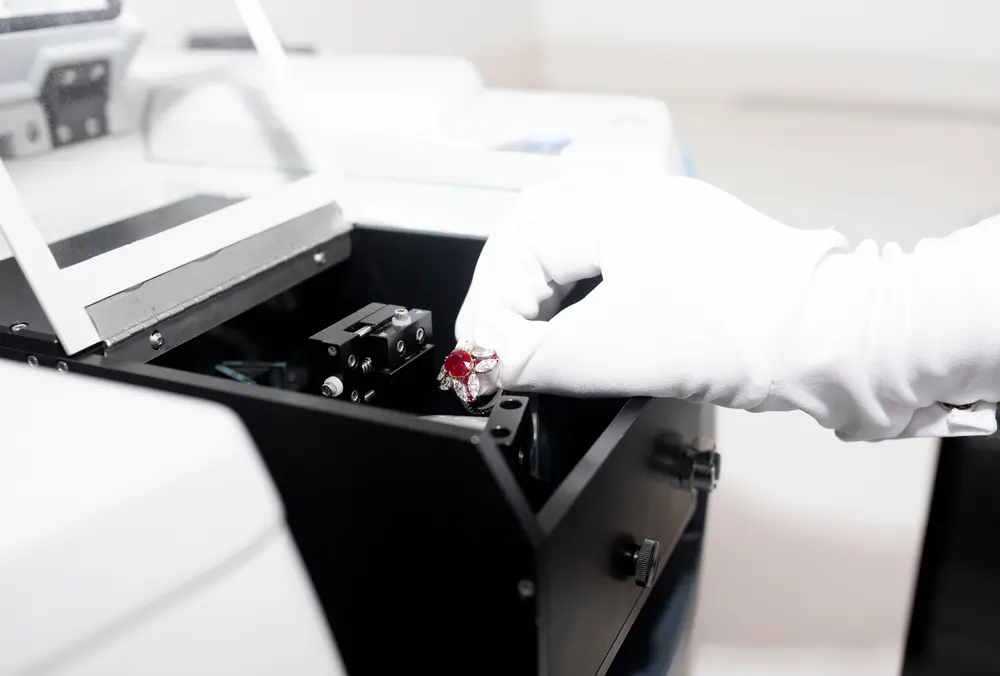
Fourier-transform infrared spectroscopy records absorption bands associated with structural defects, hydroxyl groups and organic substances.
Answers
Can contribute to heat-treatment assessment, natural-versus-synthetic separation and the recognition of oil- or resin-related clarity enhancement.
Submission
Non-destructive when a suitable optical path through the specimen is available.
Limits
Heavy inclusions, opaque areas and metal settings can restrict transmission and the regions that can be measured.

Reference collection

Comparison gives measurements meaning.

Origin determination depends on the quality and relevance of comparison material, not on a single spectrum or chemical value. ICA GemLab evaluates inclusions, spectra and trace-element patterns against relevant reference data and expresses an origin opinion only when the evidence converges.

Reference coverage changes as new material and research become available. For a stone from a particular deposit, clients can ask the laboratory to confirm whether the relevant comparison scope supports the requested origin work before submission.